November 23, 2026
Hearing faint scratching noises behind drywall late at night or discovering tiny dark droppings inside a pantry cabinet is enough to make any homeowner's stomach drop. Mice and rats are remarkably resourceful climbers and squeeze artists, capable of slipping through openings no wider than a dime or a quarter to reach warm shelter and food. Setting a few snap traps inside the kitchen might catch one or two bold explorers, yet new rodents will simply keep following the exact same scent trails indoors until their exterior doorways are found and sealed tight.
According to the NPMA, 17% of Americans encountered rodents in their homes in 2025. Scheduling rodent control services stops repeat infestations by combining strategic trapping with detailed structural exclusion around your home's exterior perimeter. Understanding the exact inspection methods trained technicians use around foundations reveals how professionals uncover hidden gaps that most homeowners walk right past every day.
Pinpointing these concealed entry routes early also protects electrical wiring, plumbing lines, and attic insulation from expensive gnawing damage and contamination. Instead of relying on guesswork, trained specialists follow proven inspection routines that uncover even the smallest structural vulnerabilities around your property.
Tracing Grease Marks and Droppings Along Exterior Walls
Rodents have notoriously poor eyesight, so they navigate almost entirely by pressing their whiskers and fur tightly against vertical walls, baseboards, and foundation edges as they travel after dark. Over weeks of nightly trips along the exact same path, natural oils and dirt from their coats rub off onto concrete, stucco, and siding, leaving behind dark, greasy smudges known as rub marks. Technicians scan lower exterior walls closely with high-powered flashlights to follow those telltale smudge trails straight toward an opening.
During rodent control services, inspectors pair rub-mark tracking with careful checks for fresh droppings, gnawed wood shavings, and worn runway paths through mulch beds. Because rats and mice consistently deposit droppings along active travel routes, clusters of pellets beneath shrubbery or behind air conditioning condensers pinpoint high-traffic zones immediately. Reading these subtle physical clues narrows down a sprawling exterior perimeter to the exact few inches where rodents slip inside.
Inspecting Utility Line Penetrations and Pipe Cutouts
Every modern home relies on dozens of pipes, cables, and conduits passing directly through exterior foundation walls—including air conditioning refrigerant lines, electrical meter conduits, gas pipes, dryer vents, and outdoor hose bibs. Builders frequently drill oversized holes through concrete or stucco during construction and fill the surrounding space with basic foam insulation or thin caulk that shrinks, cracks, or gets chewed away easily by sharp rodent teeth.
Experienced specialists delivering rodent control services test every single utility penetration around the foundation by hand and with inspection mirrors. Even a quarter-inch shadow gap beside a copper refrigerant pipe serves as an open highway straight into wall voids, crawlspaces, or kitchen cabinetry. Identifying unsealed pipe sleeves allows technicians to pack openings with chew-proof steel mesh and durable exterior sealants.
Checking Crawlspace Vents, Access Doors, and Subfloor Gaps
Crawlspace foundations rely on screened ventilation openings to keep air circulating beneath wooden floor joists, yet rusted wire mesh, warped wooden vent frames, or loose crawlspace access doors rank among the most common rodent entryways. Rats can easily push past loose screening or chew through rotted wood framing to establish warm, undisturbed nests inside fiberglass subfloor insulation.
Comprehensive rodent control services include crawling or peering closely around every foundation vent, bulkhead door, and sill plate junction. Technicians tug firmly on vent screens to verify they are anchored securely into masonry and check weatherstripping along crawlspace hatches for gnaw marks or daylight leaks. Securing crawlspace perimeters blocks rodents from climbing up inside interior plumbing chases toward the attic.
Examining Garage Door Seals and Threshold Corners
Attached garages act like giant staging rooms for mice and rats because garage doors open frequently and often sit slightly uneven against concrete driveways. Over time, rubber bottom weatherstripping turns brittle, cracks at the outer corners, or leaves small triangular gaps right where the door meets the wooden jamb. Once inside the garage, rodents find easy access through unsealed drywall seams, pet food bins, and interior utility doors leading straight into the house.
Detail-oriented rodent control services examine the entire perimeter of garage doors from inside with the lights turned off to spot thin slivers of outdoor daylight. Any beam of light shining beneath the rubber sweep or along the side vinyl stop is wide enough for a young mouse to squeeze underneath effortlessly. Reinforcing worn corner seals and threshold gaps cuts off one of the easiest ground-level entry routes on the property.
Evaluating Siding J-Channels, Weep Holes, and Veneer Seams
Where exterior siding, brick veneer, or stone fascia meets the concrete foundation slab, small construction gaps often remain hidden behind trim boards and flashing. Vinyl siding corners, overlapping stucco expansion joints, and open brick weep holes provide sheltered vertical ladders that let roof rats and house mice climb right behind exterior cladding. Because these openings sit tucked underneath overhanging edges, standing upright in the yard rarely reveals them.
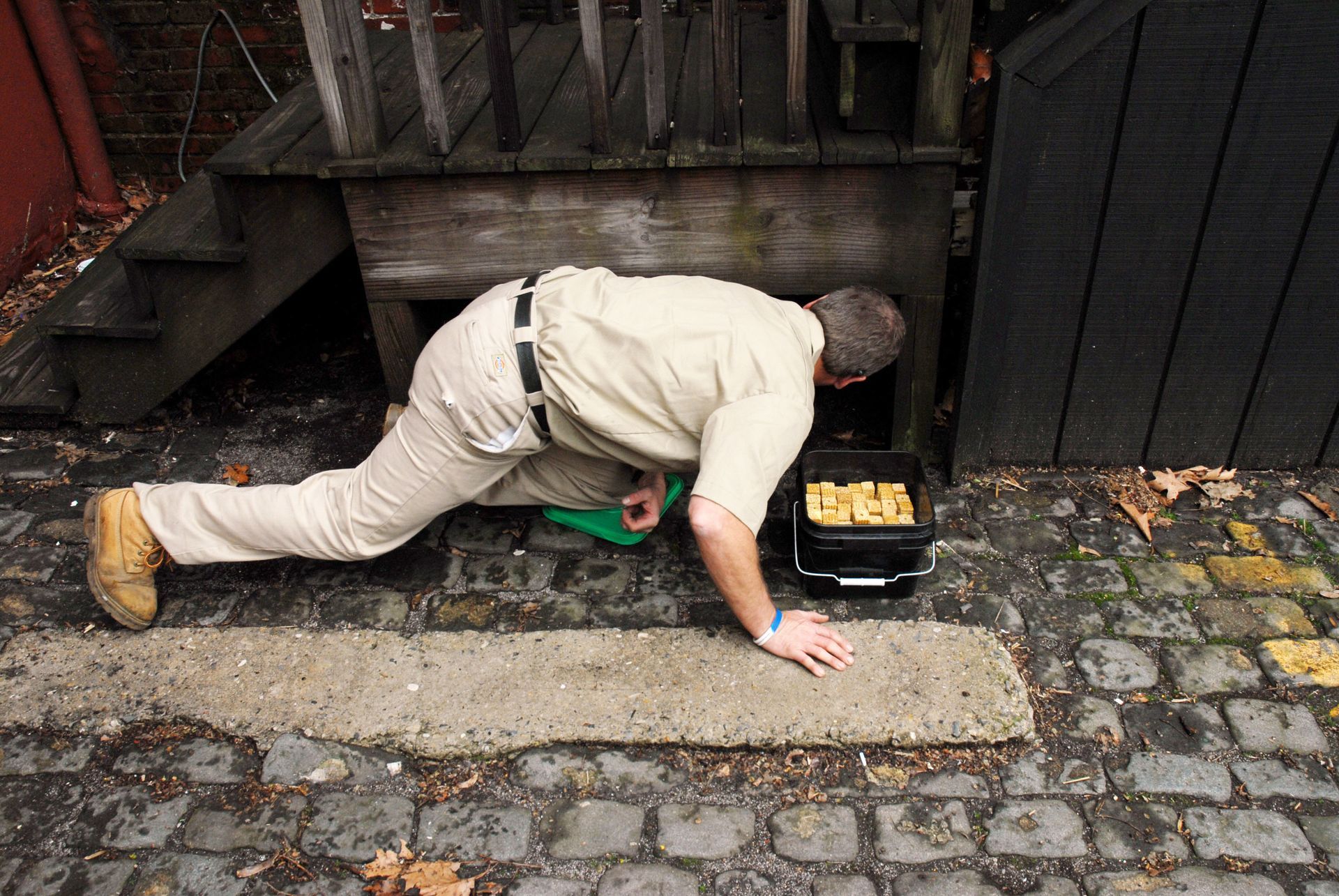
Seasoned technicians performing rodent control services crouch low along the foundation line and use angled inspection mirrors and bright beams to look upward beneath siding starter strips. Checking the underside of exterior trim exposes hidden gaps where rodents slip behind walls without ever being seen in the open yard. Pinpointing concealed trim openings ensures exclusion work seals the structure completely rather than leaving a back door wide open.
Scanning Foundation Cracks, Porch Slabs, and Deck Ledgers
Settling soil around concrete steps, front porches, patio slabs, and deck ledger boards often creates narrow pockets and sheltered burrows right up against the foundation wall. Norway rats love digging burrows beneath concrete stoops where overhead concrete protects them from predators while giving them direct access to hairline foundation cracks or rotted rim joists.
Thorough rodent control services inspect the soil line around stoops, walkways, and deck footings for freshly excavated dirt mounds or smooth burrow openings. Technicians probe suspicious gaps along foundation joints and inspect where wooden deck framing attaches to the house exterior. Sealing structural crevices and collapsing hidden burrows eliminates sheltered nesting spots right beside your home.
Verifying Roofline Transitions and Downspout Pathways
While foundation inspections start at ground level, experienced technicians always look upward along downspouts, utility risers, and overhanging tree branches that connect the yard to the roofline. Roof rats frequently travel along foundation walls, scramble up inside aluminum downspouts or along rough stucco corners, and enter through vents, gaps, or lifted roof tiles before dropping down through interior walls.
Complete rodent control services trace vertical pathways from the foundation base all the way to the eaves so ground-level exclusion is not undermined by an open attic vent above. Checking down spout brackets, attic vents, and pipe flashings ensures rodents cannot simply climb over newly sealed foundation gaps. Protecting the building envelope from footing to roofline delivers lasting peace of mind.
Keeping mice and rats out of your home takes far more than scattering a few traps in the kitchen and hoping the scratching stops. Trained technicians examine your property through a rodent's eyes—following faint grease rub marks along masonry, testing utility line cutouts, inspecting crawlspace vents, checking garage door corners, peering beneath siding trim, and tracing vertical pathways from the foundation up to the eaves. For fast free quotes, eco-friendly solutions, and complete exclusion from a team with over thirty years of experience in
rodent control services, call Annex Pest Control online today.